Return on Investment (ROI) is a key metric used in business to assess the profitability of an investment. In the context of special education, ROI can be a powerful tool to evaluate the effectiveness and efficiency of various programs, interventions, and resources.
While ROI in special education may not always be expressed in purely financial terms, it focuses on measuring the value gained from the investment made. This value can manifest in various forms, including:
Improved student outcomes: This is the core focus of ROI in special education. Key outcomes include:
Academic achievement: Increased test scores, improved grades, higher graduation rates.
Behavioral improvements: Reduced problem behaviors, increased self-control, improved social interactions.
Increased student engagement: Higher levels of student motivation, participation, and attendance.
Reduced teacher stress and burnout: Effective interventions can alleviate teacher workload and improve job satisfaction.
Improved school climate: A positive and inclusive learning environment for all students.
Cost savings:
Reduced special education service costs over the long term.
Decreased costs associated with disciplinary actions or behavioral interventions.
Prevention of future educational and societal costs related to disabilities.
Multi-Tiered Systems of Support
Calculating ROI in Special Education:
Calculating ROI in special education can be complex due to the multifaceted nature of student outcomes and the challenges of quantifying intangible benefits. However, several approaches can be employed:
1. Cost-Benefit Analysis:
Identify costs: This includes the cost of implementing the intervention (e.g., staff training, materials, technology, personnel).
Quantify benefits: This can involve:
Monetary benefits:
Increased future earnings potential for students with disabilities.
Reduced future costs associated with special education services.
Decreased costs associated with crime or incarceration.
Non-monetary benefits:
Improved quality of life for students and their families.
Increased societal participation and contribution.
Reduced societal burden associated with disability.
Compare costs and benefits: Determine the net present value of the investment by comparing the present value of the costs with the present value of the benefits over a specified period.
2. Data-Driven Approaches:
Collect and analyze data:
Track student progress using standardized tests, classroom assessments, and observational data.
Monitor attendance rates, disciplinary incidents, and other relevant indicators.
Use statistical methods: Employ statistical analyses to determine the relationship between the intervention and student outcomes.
Compare outcomes: Compare the outcomes of students who received the intervention with those who did not.
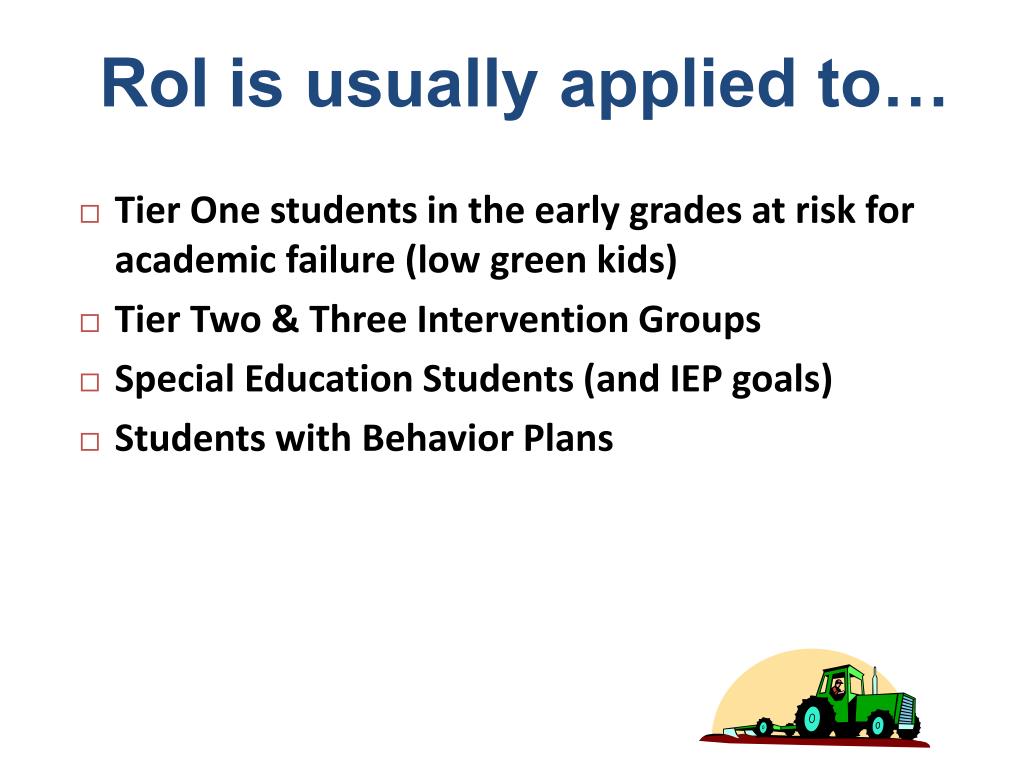
PPT – Determining Eligibility for Special Education in an RTI
3. Qualitative Methods:
Gather qualitative data:
Conduct interviews with students, teachers, parents, and other stakeholders.
Collect case studies and anecdotal evidence.
Analyze qualitative data:
Identify themes and patterns in the data.
Determine the perceived value and impact of the intervention.
Challenges in Calculating ROI in Special Education:
Difficulties in quantifying benefits: Many of the most significant benefits of special education interventions, such as improved quality of life and increased societal participation, are difficult to quantify in monetary terms.
Long-term perspective: The full impact of many special education interventions may not be realized for years or even decades.
Data limitations: Access to reliable and comprehensive data on student outcomes can be challenging.
Ethical considerations:
It is crucial to avoid reducing students with disabilities to mere economic commodities.
The primary focus should always be on improving student outcomes and well-being, not solely on financial returns.
Examples of ROI in Special Education:
Early Intervention Programs:
ROI: Early intervention programs for infants and toddlers with disabilities have been shown to have significant long-term benefits, including improved academic achievement, reduced need for special education services later in life, and increased employment rates.
Assistive Technology:
ROI: Assistive technology can improve student access to education and increase independence.
Examples:
Text-to-speech software can improve reading comprehension for students with dyslexia.
Communication devices can enable students with severe disabilities to communicate more effectively.
Inclusive Education Practices:
ROI: Inclusive education practices, such as co-teaching and differentiated instruction, can improve academic outcomes for all students, including those with disabilities, while also creating a more inclusive and equitable learning environment.
Ethical Considerations:
It is crucial to approach ROI analysis in special education with ethical sensitivity.
Focus on student well-being: The primary goal should always be to improve student outcomes and well-being, not solely to generate financial returns.
Avoid reducing students to commodities: Students with disabilities should not be viewed as mere economic assets.
Ensure equity and inclusion:
All students, regardless of their background or disability status, should have access to high-quality education and support services.