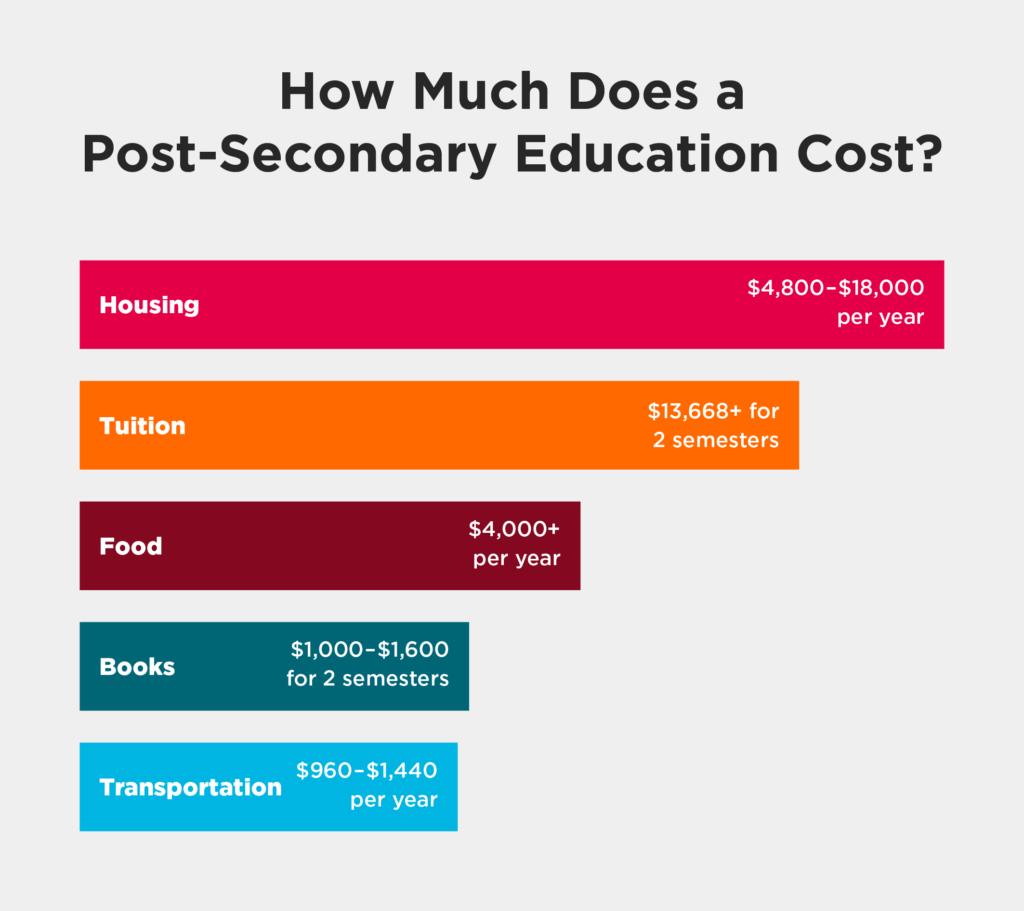
Post-Secondary education Expenses: A Comprehensive Overview
Post-secondary education, encompassing colleges, universities, and vocational schools, is a significant investment with far-reaching implications for individual careers and societal progress. However, the rising costs of this endeavor pose a substantial financial burden on students and their families. This article delves into the multifaceted landscape of post-secondary education expenses, examining key components and exploring strategies for navigating these costs effectively.
1. Tuition and Fees
Tuition: This is the primary cost, representing the charge for instruction provided by the institution. Tuition rates vary significantly based on several factors:
Institution Type: Public universities generally have lower tuition rates for in-state residents compared to out-of-state students and private institutions.
Program of Study: Degrees in specialized fields like medicine, law, and engineering often carry higher tuition costs.
Residency Status: As mentioned, in-state students typically pay lower tuition at public universities.
Fees: These are additional charges beyond tuition, covering various services and facilities. Common fees include:
Student Activity Fees: Funding student organizations, events, and recreational facilities.
Technology Fees: Supporting campus-wide technology infrastructure and student access to software and resources.
Health Services Fees: Contributing to the costs of student health centers.
Laboratory Fees: Covering the expenses of specialized equipment and materials used in laboratory courses.
The Cost of Post-Secondary Education
2. Living Expenses
Housing:
On-Campus Housing: Includes residence halls, dormitories, and apartments provided by the institution. Costs vary based on room type, amenities, and meal plan options.
Off-Campus Housing: Renting apartments or houses in the surrounding community offers more independence but requires careful budgeting for rent, utilities, and furnishings.
Food:
Meal Plans: On-campus meal plans provide access to dining halls and offer varying levels of meal options and flexibility.
Off-Campus Dining: Students living off-campus must budget for groceries, dining out, and meal preparation.
Transportation:
Commuting Costs: If commuting from home, expenses include fuel, public transportation fares, or vehicle maintenance.
On-Campus Transportation: Campus shuttles or bicycles may be available, but costs may still be incurred for parking permits or vehicle maintenance.
3. Books and Supplies
Textbooks: A significant expense, particularly for courses requiring specialized or frequently updated textbooks.
Course Materials: Includes notebooks, pens, calculators, lab supplies, and other materials necessary for coursework.
Technology:
Laptops and Computers: Essential for academic work, research, and online learning.
Software and Internet Access: Required for coursework, research, and communication.
What is Post-Secondary Education in Canada? Robertson College
4. Personal Expenses
Healthcare:
Health Insurance: Students may need to purchase health insurance plans or utilize student health plans offered by the institution.
Medical Expenses: Covers unexpected medical costs not covered by insurance.
Personal Care: Includes expenses for clothing, toiletries, and personal grooming.
Entertainment:
Social Activities: Attending campus events, concerts, and sporting events.
Personal Interests: Pursuing hobbies and leisure activities.
5. Other Costs
Student Loans: Interest payments on student loans contribute significantly to post-secondary education expenses.
Travel Expenses:
Study Abroad Programs: Incur costs related to travel, accommodation, and living expenses in a foreign country.
Internships: May involve travel expenses to and from internship sites.
Professional Licensing and Certifications:
Exam Fees: Costs associated with professional licensing exams required for certain careers.
Certification Programs: Expenses for specialized training and certifications to enhance career prospects.
Strategies for Managing Post-Secondary Education Expenses
Financial Aid: Explore all available financial aid options, including:
Scholarships and Grants: Merit-based and need-based awards that do not require repayment.
Work-Study Programs: On-campus employment opportunities that help offset educational costs.
Student Loans: Federal and private loans that require repayment with interest.
Budgeting and Financial Planning:
Create a Budget: Track income and expenses to identify areas for potential savings.
Seek Financial Counseling: Consult with financial aid advisors or professional financial counselors for personalized guidance.
Academic Strategies:
Maintain Good Academic Standing: Eligibility for scholarships and grants often depends on academic performance.
Graduate in a Timely Manner: Minimizing the number of semesters or years spent in college reduces overall costs.
Explore Credit Transfer Options: Transfer credits earned at community colleges can reduce the cost of a four-year degree.
Explore Alternative Funding Options:
529 Plans: Tax-advantaged savings plans specifically designed for education expenses.
Employer Tuition Reimbursement Programs: Some employers offer reimbursement for tuition costs incurred by employees.
Military Benefits: Veterans and active-duty military personnel may be eligible for educational benefits.
Conclusion
Post-secondary education is a valuable investment, but the associated expenses can be substantial. By carefully considering tuition and fees, living expenses, and other costs, and by exploring available financial aid options and implementing effective budgeting strategies, students and their families can navigate these challenges and achieve their educational goals.
Disclaimer: This information is for general knowledge and informational purposes only and does not constitute financial, legal, or professional advice.