
university vs. College: Navigating Your Post-Secondary Path
The terms “university” and “college” are often used interchangeably, leading to confusion for prospective students. While they both offer post-secondary education, significant differences exist in their structure, offerings, and overall experience. Understanding these distinctions is crucial for making an informed decision about your future. This comprehensive guide will delve into the nuances of universities and colleges, helping you determine which path best aligns with your academic and career goals.
The fundamental difference between a university and a college lies in their scope and focus.
University: A Hub of Comprehensive Education and Research
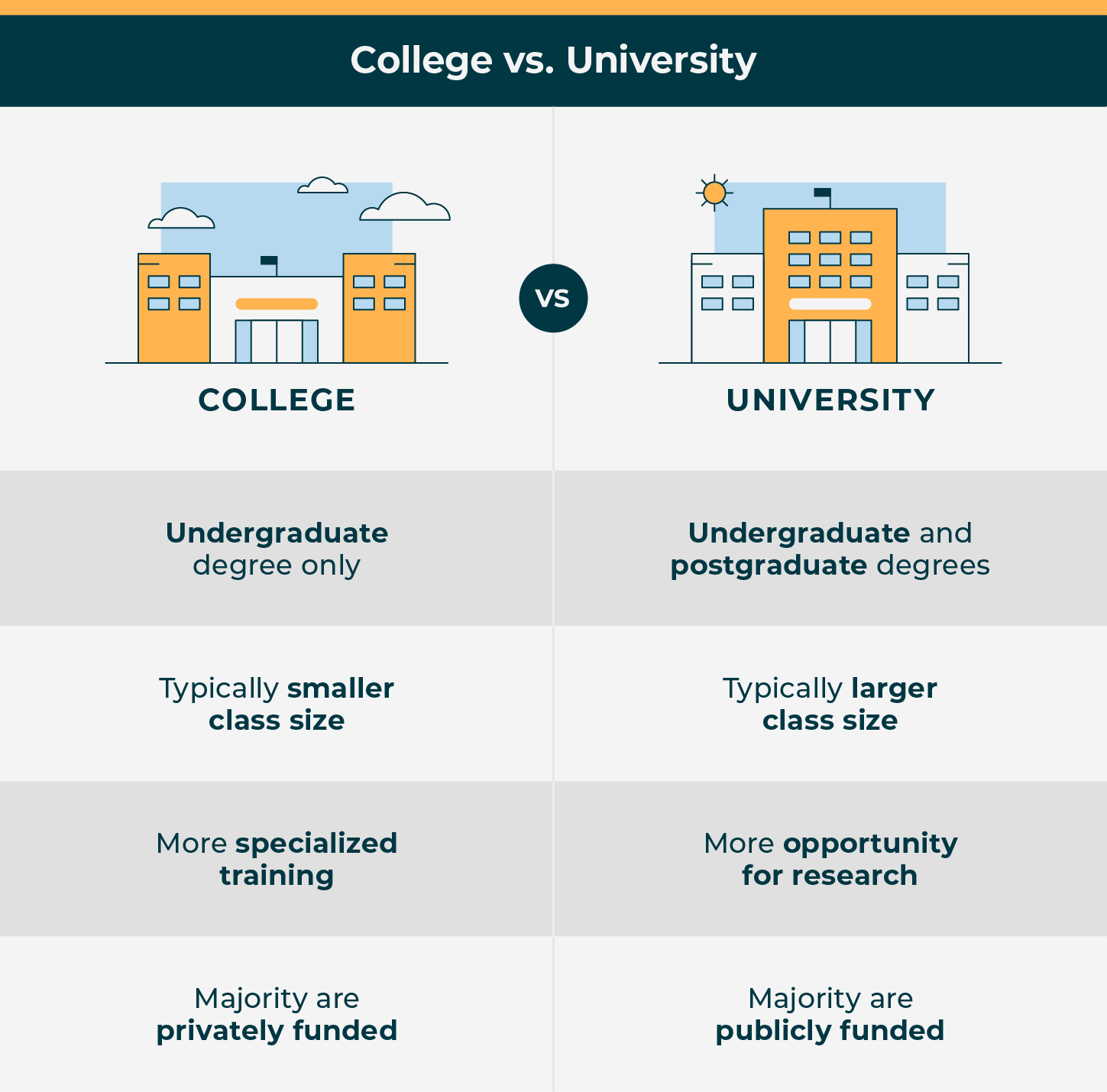
Universities are typically larger institutions that offer a broad range of undergraduate and graduate programs. They are known for their emphasis on research, theoretical knowledge, and a diverse academic environment.
College: Focused on Specific Skills and Practical Application
Colleges, on the other hand, tend to be smaller and more specialized. They often prioritize practical skills, vocational training, and career-oriented programs.
The types of degrees and programs offered are a key differentiator between universities and colleges.
University: Diverse Academic Landscape

Universities offer a wide array of programs across various disciplines, including:
Bachelor’s Degrees:
Bachelor of Arts (BA)
Master’s Degrees:
Master of Arts (MA)
Doctoral Degrees (PhDs):
Professional Degrees:
Medicine (MD)
Universities are known for their research-intensive environments, often featuring dedicated research labs and faculty actively engaged in scholarly pursuits.
College: Career-Focused Training
Colleges typically offer:
Associate Degrees:
Associate of Arts (AA)
Certificates and Diplomas:
Colleges focus on preparing students for immediate entry into the workforce, with programs designed to equip them with practical skills and industry-relevant knowledge.
The size and campus environment significantly impact the student experience.
University: Large and Diverse Communities
Universities often have large campuses with diverse student populations. They typically offer a wide range of extracurricular activities, student organizations, and social events.
Large Class Sizes:
Extensive Resources:
Residential Life:
College: Smaller and More Intimate Settings
Colleges tend to have smaller campuses and more intimate learning environments. They often foster a close-knit community with personalized attention from faculty.
Smaller Class Sizes:
Focused Learning:
Community Feel:
The role of faculty and the teaching styles employed differ between universities and colleges.
University: Research-Oriented Faculty
University faculty are often heavily involved in research, with teaching as one of their responsibilities.
Research Focus:
Theoretical Emphasis:
Graduate Assistants:
College: Teaching-Focused Faculty
College faculty primarily focus on teaching and mentoring students.
Practical Application:
Hands-On Learning:
Personalized Attention:
The cost of attendance and available financial aid options are important considerations.
University: Higher Tuition and Fees
Universities typically have higher tuition and fees compared to colleges.
Research Funding:
Prestige and Reputation:
Financial Aid:
College: Lower Tuition and Fees
Colleges generally offer more affordable tuition and fees.
Vocational Training:
Community Support:
Financial Aid:
The career paths and outcomes associated with universities and colleges differ significantly.
University: Long-Term Career Advancement
A university education prepares students for long-term career advancement and leadership roles.
Graduate Studies:
Research and Development:
Professional Careers:
College: Immediate Workforce Entry
A college education prepares students for immediate entry into specific trades or professions.
Skilled Trades:
Technical Fields:
Entry-Level Positions:
When choosing between a university and a college, consider the following factors:
Academic Goals:
Career Aspirations:
Learning Style:
Financial Resources:
Campus Environment:
The decision between a university and a college is a personal one that depends on your individual goals and circumstances. Universities offer a comprehensive education with a focus on research and theoretical knowledge, while colleges provide practical skills and career-oriented training. By carefully considering your academic and career aspirations, you can make an informed choice that sets you on the path to success. Ultimately, both universities and colleges play vital roles in shaping the future workforce and contributing to society.
university vs college